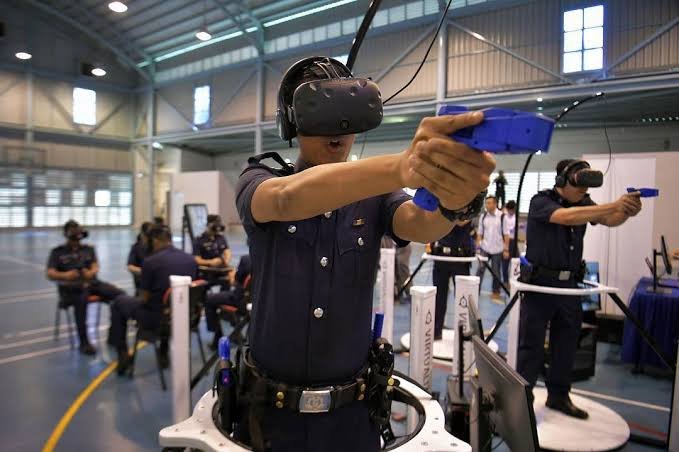

Crisis intervention is among the most demanding responsibilities law enforcement officers may encounter. Situations involving people experiencing mental health emergencies, suicidal thoughts, severe emotional distress, or extreme agitation can change within seconds. Officers must make careful decisions while managing communication, safety, emotions, and the possibility of unpredictable behavior. Because these encounters are difficult to reproduce in a classroom, law enforcement agencies today tend to invest in VR crisis intervention training.
How virtual reality is transforming crisis intervention training for law enforcement
VR or virtual reality technology offers a combination of realism, repetition, flexibility, and controlled risk. Instead of simply watching a training video or participating in a scripted role-play, officers can enter simulated environments and interact with virtual individuals in ways that more closely resemble real encounters. VR crisis intervention training allows trainees to practice communication and de-escalation skills repeatedly while receiving feedback without exposing themselves, instructors, or role-players to the risks associated with high-intensity exercises.
For many years, live role-playing has been an important part of crisis intervention training. In these exercises, instructors, fellow officers, actors, or volunteers portray individuals experiencing different types of crises. Such activities can be highly useful because they require officers to communicate directly, observe behavior, and make decisions under pressure. However, traditional role-play can be difficult to organize on a large scale. Departments need appropriate locations, available instructors, trained participants, and enough time to conduct each exercise. Staffing requirements can become particularly challenging for agencies that need to train large numbers of officers while maintaining regular operations. Another limitation is consistency. A role-player may respond differently each time a scenario is performed. Although this can introduce realism, it can also make standardized assessment more difficult. An officer may receive a substantially different experience from another trainee even when both are supposed to complete the same exercise.
Video-based simulation systems addressed some of these concerns by providing repeatable scenarios. However, fixed video simulations can create another weakness: familiarity. Once an officer has completed a scenario several times, they may remember the sequence of events and expected responses rather than genuinely evaluating the situation. The exercise can gradually become an exercise in remembering what happens next instead of developing flexible crisis communication skills.
Modern VR training systems are increasingly designed to make interactions more open-ended. Rather than requiring trainees to select from a limited list of predetermined responses, some platforms allow officers to communicate using their own words. This distinction is particularly important in crisis intervention. Effective de-escalation is rarely about delivering one perfect sentence. Officers need to listen carefully, recognize emotional cues, adjust their tone, choose appropriate language, and respond to the person’s changing behavior.
A VR scenario can place an officer in a range of challenging situations, such as responding to a distressed person in a public location, communicating with someone threatening self-harm, or attempting to calm an individual experiencing an emotional crisis. The virtual subject can respond according to the officer’s communication and actions, creating a more fluid training experience. This approach encourages officers to practice genuine skills rather than memorize predetermined answers. Trainees can work on patience, active listening, empathy, verbal de-escalation, appropriate questioning, and maintaining a calm presence while dealing with uncertainty.